There are a lot more choices these days for hypertension treatment than when I started out. Once several agents became available, we used to choose medications according to what type of patient we had in front of us: A person with leg edema and hypertension would be put on a diuretic, a type A personality with a high resting pulse would get a beta blocker, a patient with heart disease might get an ACE inhibitor and a person who might not show up for their bloodwork or follow up appointment would get a modern calcium channel blocker like amlodipine.
Then came the statistics that showed slightly better outcomes for diuretics and ACE inhibitors and all of a sudden we were supposed to take those small differences seriously enough to force all patients into the same treatment algorithm.
Some time after that came the data that showed that Black hypertensives respond differently to ACE/ARB drugs, which led to race based hypertension guidelines, which are now being debunked. Some people are now saying treat all hypertensives the same, while others are again suggesting making treatment decisions based on “individual factors”.
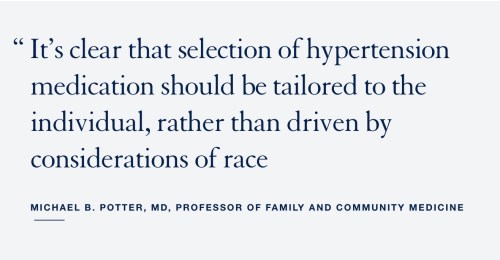
I, for one, still individualize based on what my patient looks like and their personal preferences and their likelihood of compliance with followup appointments and blood testing.
I will never forget Fran, the chainsmoking, hypertensive woman I started on lisinopril many years ago. This drug was not generic back then and she asked for a 90 day supply because that would save her money. I told her a couple of times how important it was to get the bloodwork after starting this drug and placed the order to check her kidney function within just a few weeks.
When I saw her back 3 months later, I knew immediately something was dreadfully wrong with her. She was in kidney failure and it turned out that she didn’t have renal artery stenosis, which is what we’re supposed to consider and do bloodwork to check for elevated creatinine shortly after starting lisinopril, but she had a coarctation of the aorta. The vascular surgeons cleaned out her plumbing and her kidneys recovered but that was an important lesson, actually two:
Lesson number one is to measure lower extremity blood pressure in new hypertension cases. Ankle Brachial Index, ABI, even has a CPT code and may be billable to the tune of about $78 where I work (I don’t worry about billing but I do use a pocket Doppler and a conventional sphygmomanometer to do it right).
Lesson number two is not to prescribe a bigger supply of pills than you feel comfortable with. I now only prescribe 30 days of a new ACE or ARB. When I get an instant (!) “patient requests 90day supply” request from Walgreens – because they want to sell more pills – I turn it down.
And, now that I think of it, there is a third (bonus) lesson with new hypertensives. If they have a very low potassium and no good explanation for it, like chronic diarrhea, I very quickly consider they might have hyperaldosteronism and check their renin-aldosterone ratio before I put them on an ACE or ARB, since they may be better off on spironolactone than the traditional blood pressure pills. And they may even need surgery.











 A Country Doctor Writes:

How many providers calibrate their blood pressure monitors frequently to get the right readings before they prescribe medications??
After exploring the “A Country Doctor Writes” blog, I’m truly captivated by the unique perspective it offers on the medical profession and rural healthcare. Dr. Smith’s insights and personal anecdotes provide a window into the challenges and joys of being a physician in a rural setting. The posts cover a wide range of topics, from patient stories to reflections on the healthcare system. It’s evident that Dr. Smith possesses a deep understanding of the intricacies of rural healthcare and a genuine passion for serving his community. The blog’s authenticity and relatability make it a compelling read for both medical professionals and the general public. Kudos to “A Country Doctor Writes” for sharing these valuable stories and shedding light on the vital role rural doctors play in healthcare delivery. This blog is a testament to the power of storytelling and the impact one dedicated physician can have on their patients and their community.